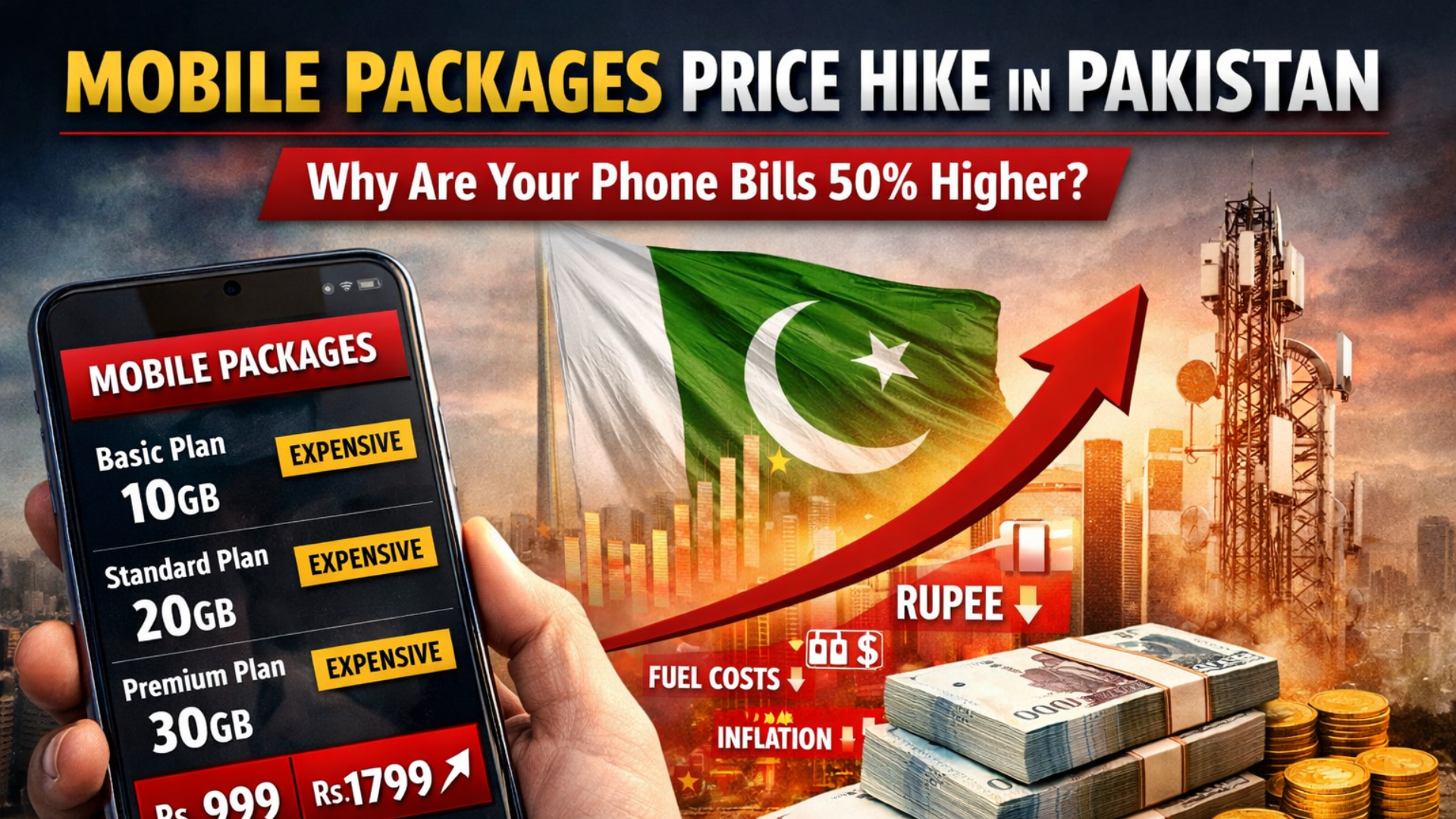

Mobile Packages Price Increase in Pakistan. Mobile phone users across Pakistan have felt the pressure lately. Monthly call and internet packages now cost much more than before. Many users are asking one simple question: why are mobile packages up to 50% more expensive now?
The answer came straight from the federal government. During a Senate session, the Ministry of Information Technology and Telecommunications confirmed that telecom operators have increased package prices by 20% to 50% during the current financial year. This article explains the real reasons behind the hike, what the government said, and how it affects everyday mobile users in Pakistan.
Government Confirms Mobile Package Price Hike
The issue was formally raised in the Senate by Senator Rana Mahmood Ul Hassan. In response, Shaza Fatima Khawaja, the Minister for Information Technology and Telecommunications, submitted a written reply acknowledging the increase.
She confirmed that mobile operators adjusted their monthly packages gradually, with increases ranging between 20% and 50% during FY 2024–25. However, she rejected claims that any package jumped directly from Rs. 600 to Rs. 1500, stating that the Pakistan Telecommunication Authority found no such case.
How Much Have Mobile Packages Increased?
According to the government’s response, some examples of verified increases include:

- Packages increased from Rs. 999 to Rs. 1499
- Packages increased from Rs. 1500 to Rs. 1799
These adjustments were made over time rather than overnight. Still, for many users, the overall impact feels heavy due to rising household expenses.
Key Reasons Why Mobile Packages Are More Expensive
The minister explained that telecom operators are facing intense economic pressure. Several factors combined to push costs higher across the industry.
1. Massive Increase in Fuel Prices
Fuel prices surged by 158% between March 2021 and May 2024. Telecom networks rely heavily on fuel for generators, tower operations, and backup power, especially during load shedding.
2. High Inflation Rate
Pakistan’s inflation increased by 77% during the same period. This raised the cost of salaries, maintenance, equipment, logistics, and day-to-day operations for telecom companies.

3. Rupee Depreciation Against the Dollar
The Pakistani rupee depreciated by 44% against the US dollar. Since telecom equipment, software licenses, and network upgrades are largely imported, operators now pay far more for the same infrastructure.
4. Sharp Rise in Interest Rates
The policy rate increased by 214%, making borrowing extremely expensive. Telecom companies depend on financing for network expansion and 4G and 5G readiness, and higher interest rates significantly increased their costs.
Telecom Revenue vs Inflation: A Growing Gap
Despite rising prices, the government revealed an important detail. Over the last five years:
- Average annual telecom revenue growth: 9%
- Average annual inflation rate: 17%
This mismatch has caused what the minister described as value erosion across Pakistan’s mobile telecom industry. In simple terms, even with higher package prices, telecom companies are earning less in real terms due to inflation.

Role of PTA in Mobile Tariff Approval
Under the Pakistan Telecommunication (Re-organization) Act, 1996 and Mobile Tariff Regulations, 2025, operators with Significant Market Power (SMP) must obtain prior approval before revising tariffs.
The minister confirmed that Jazz has been declared an SMP operator in the retail mobile telecom market. Its tariffs are reviewed and approved by the PTA.
For other operators, PTA still holds the authority to step in if pricing decisions harm consumer interests or reduce fair competition.
Are Consumers Protected?
Yes, at least on paper. The PTA monitors pricing trends and has the power to intervene if tariffs become unreasonable. The government emphasized that no unapproved or sudden extreme price hikes were allowed.

However, consumer groups argue that gradual increases still burden low-income users, especially students and daily wage earners who rely on mobile internet for education and work.
What This Means for Mobile Users in Pakistan
For everyday users, higher package prices mean:
- Reduced data usage
- Switching to smaller or weekly packages
- Increased reliance on Wi-Fi
- Higher monthly communication expenses
Many users are now carefully comparing bundles and monitoring usage to control costs.
Will Mobile Prices Go Down in the Future?
There is no immediate indication of price reductions. Future pricing will largely depend on:

- Inflation control
- Stability of the rupee
- Lower fuel prices
- Reduction in interest rates
If economic conditions improve, pressure on telecom operators may ease. Until then, stable or slightly higher prices are more likely than price cuts.
Conclusion
Mobile packages in Pakistan are more expensive today because the telecom industry is under serious economic stress. Rising fuel costs, record inflation, rupee depreciation, and high interest rates have all played a role. While the government and PTA insist that increases were regulated and gradual, the financial impact on consumers is real.
For now, users can protect themselves by choosing suitable packages, tracking usage, and staying informed about official tariff updates. Understanding the reasons behind the increase helps explain why mobile bills now feel heavier than ever.