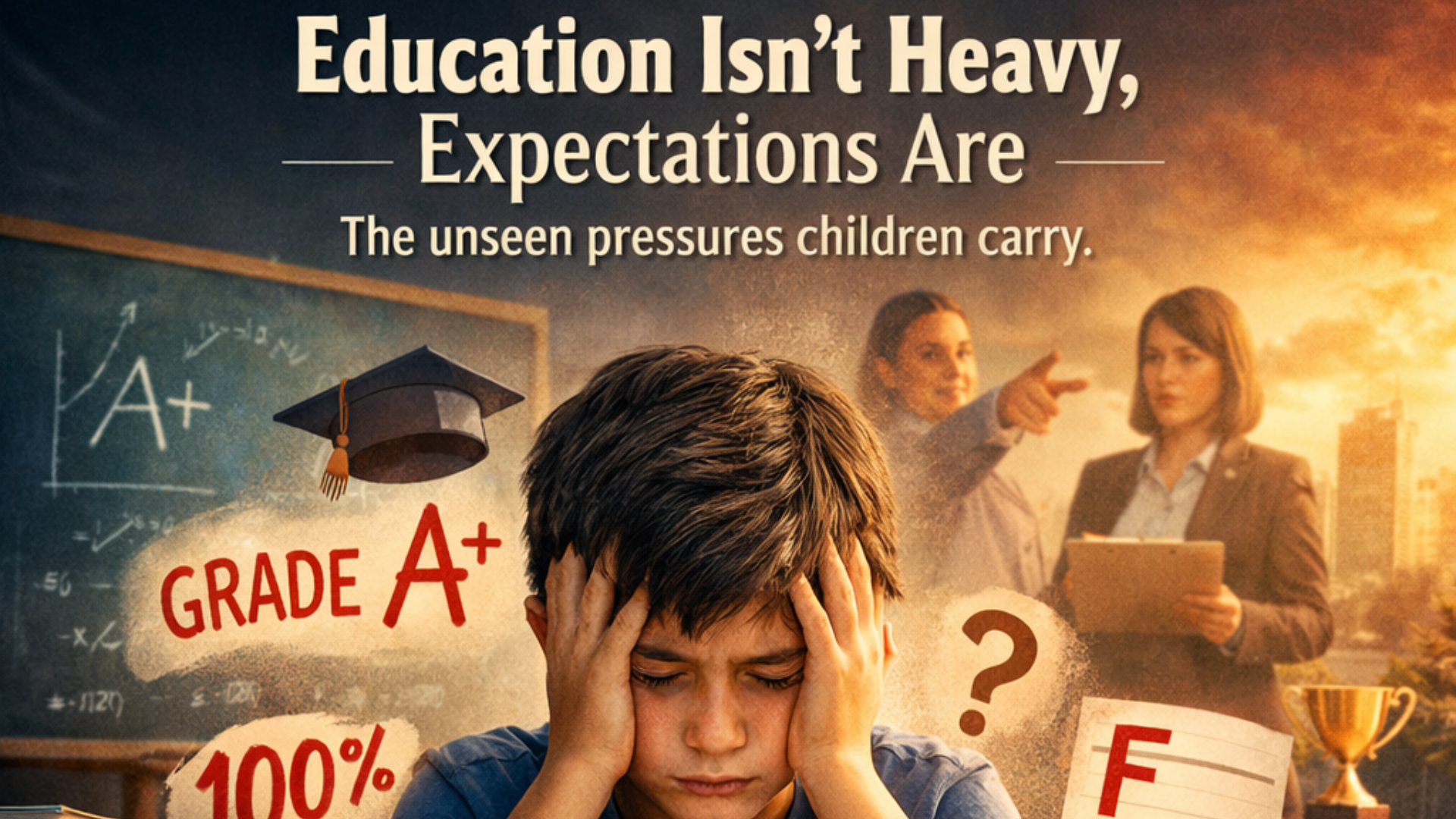

Education Isn’t Heavy, Expectations. Education is meant to help children grow, learn, and discover the world around them. It should build curiosity and confidence. But for many children today, learning feels stressful and heavy. This heaviness does not come from books or classrooms. It comes from expectations placed on young minds too early and too often.
Why Education Feels Heavy Today
Modern education systems focus heavily on results. Grades, exams, rankings, and performance are treated as the main goals. While these things matter, they are not the full picture. Very little attention is given to how children feel during the learning process. A child may look confident on the outside, but inside they may feel confused, afraid, or pressured to perform.
Children Learn to Adjust Before They Learn to Express
From an early age, children are taught to adjust. They learn how to follow rules, sit quietly, complete tasks, and meet expectations. This teaches discipline, but it also teaches silence. Many children learn how to fit into the system before they learn how to express their thoughts. Over time, learning becomes more about avoiding mistakes than exploring ideas.

Silent Pressure of Performance
Pressure in education often grows quietly. It usually comes from good intentions. Parents want their children to succeed. Teachers want strong results. Schools want better performance. But when pressure becomes constant, children start to believe that their value depends on grades. They begin to fear mistakes and hide their questions. This silent pressure slowly makes learning feel heavy.
Learning in a Language That Is Not Home
For many children, learning is even harder because it happens in a language that is not their mother tongue. They must understand concepts, translate ideas in their minds, and speak correctly at the same time. This extra effort is rarely noticed. When language comfort and emotional readiness are ignored, education becomes stressful instead of supportive.

When Questions Stay Unasked
In rigid learning systems, many questions remain unasked. Children may want to understand more, but they fear looking weak or slow. So they stay quiet. Confusion builds up. Confidence goes down. This is how learning becomes difficult without anyone realizing it.
Pressure Comes From Systems, Not From Neglect
Most pressure does not come from neglect. It comes from systems that have existed for a long time. Ideas like one definition of success or one correct learning path are passed down without being questioned. Children adapt to these systems, but adaptation does not mean comfort. It often means carrying stress silently.

Why Dialogue and Mistakes Matter
Education becomes lighter when there is space for dialogue and mistakes. Children need freedom to ask questions, learn at their own pace, and try again without fear. Mistakes should be treated as part of learning, not as failure. When children feel safe to speak, they engage more deeply with education.
Youth as Co-Creators of Learning
World Education Day 2026 highlights an important idea. Children should not only receive education. They should help shape it. When young people are involved in their learning journey, education becomes more human, inclusive, and meaningful. Listening to students helps create systems that respect both knowledge and emotions.

Seeing the Unseen Pressure
Campaigns like those highlighted on World Education Day remind parents, teachers, and society to pause and reflect. They bring attention to the unseen pressure children carry, especially when learning is disconnected from emotional readiness and language comfort. Education should focus not only on what children learn, but also on how they experience learning.
Education Is About Experience, Not Just Content
True education is about experience, not just content. A child who feels safe will ask questions, explore ideas, and learn deeply. A child who feels pressure will memorize, stay silent, and forget quickly. Learning that feels light stays with children for life.

Role of Parents and Teachers
Parents and teachers play an important role in reducing pressure. Encouraging effort instead of comparison, allowing mistakes, and listening to children can make a big difference. A supportive environment builds confident learners and healthy minds.
Conclusion
Education itself is not heavy. Expectations are. When expectations become heavier than curiosity, children struggle silently. By listening to young voices and allowing them to co-create their learning journey, education becomes lighter, kinder, and stronger for the future.