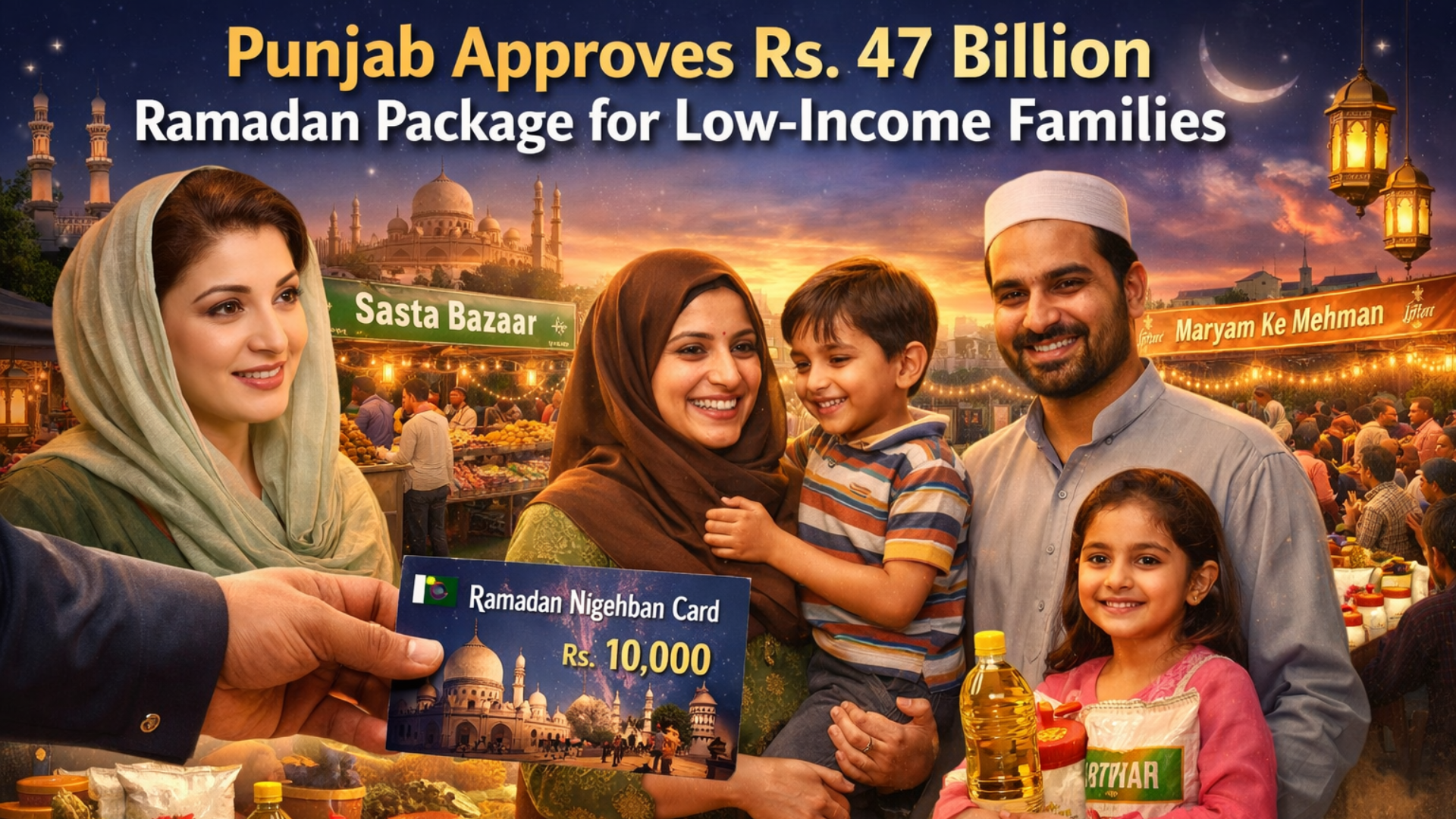

Punjab Approves Rs. 47 Billion Ramadan Package. The Punjab government has approved a large Ramadan relief package to support poor and deserving families. The total cost of this package is Rs. 47 billion. This step aims to reduce financial pressure on low-income households during the holy month of Ramadan. Food prices usually rise in this period, so this package brings timely help for millions of people across the province.
The decision shows the government’s focus on public welfare and social support. The main goal is to ensure that no family sleeps hungry during Ramadan.
Decision Taken in High-Level Government Meeting
The approval of the Ramadan package was given in a high-level meeting. The meeting was chaired by Maryam Nawaz Sharif, the Chief Minister of Punjab. Senior government officials attended the meeting to review Ramadan arrangements and relief plans.
During the meeting, the chief minister stressed that relief should reach people directly. She made it clear that there should be no long procedures or unnecessary delays. Transparency and dignity of the poor were given top priority.
Rs. 10,000 Cash Support for 4.2 Million Families
Under this Ramadan package, Rs. 10,000 will be given to 4.2 million deserving families. This means nearly one crore people will benefit from this initiative. The money will help families buy food, daily necessities, and basic items during Ramadan.
This financial support is direct cash assistance. It allows families to spend according to their needs. This method is more respectful and flexible compared to fixed ration bags.

Introduction of Ramadan Nigehban Card
The cash assistance will be delivered through the Ramadan Nigehban Card. This card is designed to make the process easy and secure. Families will not need to stand in long lines or visit offices repeatedly.
The Nigehban Card works like a normal banking card. It helps people withdraw money or make purchases without hassle. This system reduces corruption and saves time for both citizens and authorities.
No Need to Visit Government Offices
One of the most helpful features of this scheme is that beneficiaries do not need to visit government offices. Instead, district administrations will distribute Nigehban Cards door to door.
This approach is especially important for elderly people, women, and disabled individuals. It removes travel costs and stress. It also ensures that deserving families are not left out due to lack of access.
Easy Cash Withdrawal and Shopping Options
Cardholders can withdraw cash through Bank of Punjab branchless banking agents. They can also use One Link network ATMs across the province. This wide network makes access easy, even in small towns.

In addition, the Nigehban Card can be used at designated Bank of Punjab merchant outlets. Families can buy groceries and daily items directly using the card. This gives people multiple ways to use the support money.
Card Activation Through ATMs and Centers
To activate the Nigehban Card, 136 activation centers will be set up across Punjab. These centers will help people who face issues during activation.
For added convenience, cards can also be activated through Bank of Punjab ATMs. This saves time and reduces crowding at activation centers. The process is designed to be simple and user-friendly.
Increase in Support for Ration Card Holders
The government has also announced good news for ration card holders. During Ramadan, they will receive Rs. 10,000 instead of the earlier Rs. 3,000 monthly amount.
This increase reflects the rising cost of living and food inflation. It ensures that ration card holders can manage expenses better during Ramadan.

Nigehban Dastarkhwan for Free Iftar
As part of the Ramadan food initiative, Nigehban Dastarkhwan will be set up across Punjab. These dastarkhwans are titled “Maryam Ke Mehman”.
Each tehsil will have eight dastarkhwans. Every dastarkhwan will serve iftar to 2,000 fasting people daily. This will provide relief to laborers, travelers, and those without family support.
Quality Iftar Menu for Fasting People
The government has also decided on a quality iftar menu. The menu will include:
- Dates
- Samosas
- Milk
- Rooh Afza
- Bananas
- Chicken biryani
This menu ensures proper nutrition and dignity. The aim is not just to feed people, but to treat them with respect and care.
Strict Monitoring by Local Administration
To ensure smooth arrangements, commissioners, deputy commissioners, and assistant commissioners have been directed to personally monitor operations. They will supervise cleanliness, food quality, and crowd management.

This hands-on monitoring helps prevent mismanagement and ensures high standards at all dastarkhwans and relief points.
Expansion of Sasta Bazaars Across Punjab
The Ramadan relief plan also includes the expansion of Sasta Bazaars. These markets offer essential items at subsidized rates.
A total of 65 Sasta Bazaars will operate in 30 districts. Additionally, there will be 50 permanent Sasta Bazaars and 15 Sasta on the Go outlets. Temporary Ramadan Sasta Bazaars will be set up in the remaining 11 districts.
Immediate Land Identification for New Markets
The chief minister has ordered immediate identification of land for Sasta Bazaars in 60 tehsils. This step will help expand affordable shopping options beyond Ramadan.
These bazaars help control prices and reduce the burden on low-income families. They also discourage hoarding and unfair pricing.

Provincial Monitoring Room with 1,250 Cameras
To maintain transparency, a provincial monitoring room has been established. It is equipped with 1,250 cameras placed across bazaars and relief centers.
The monitoring room will oversee pricing, cleanliness, security, and overall operations. This digital oversight ensures accountability at every level.
Dedicated Stalls to Ensure Uninterrupted Supply
On special instructions from the chief minister, dedicated stalls will be set up at Sasta Bazaars. These stalls will include:
- Flour mills
- Chicken suppliers
- Grocery traders
- Ghee mills associations
This arrangement ensures uninterrupted supply of essential food items. It also helps stabilize prices during peak Ramadan demand.
Strong Step Toward Public Welfare
The Rs. 47 billion Ramadan package is one of the largest relief initiatives in Punjab’s history. It combines cash assistance, food support, and price control measures.
By using technology, door-to-door delivery, and strict monitoring, the government aims to reach every deserving family. This package reflects a people-first approach and strong commitment to social welfare.
Conclusion
The Punjab Ramadan relief package is a comprehensive and well-planned initiative. It addresses financial needs, food security, and market stability at the same time. With direct cash support, free iftar, and affordable markets, millions of families will feel relief during Ramadan.
This initiative sets a positive example of how government support can be efficient, respectful, and impactful. For low-income families, this package brings hope, dignity, and comfort during the holy month.