
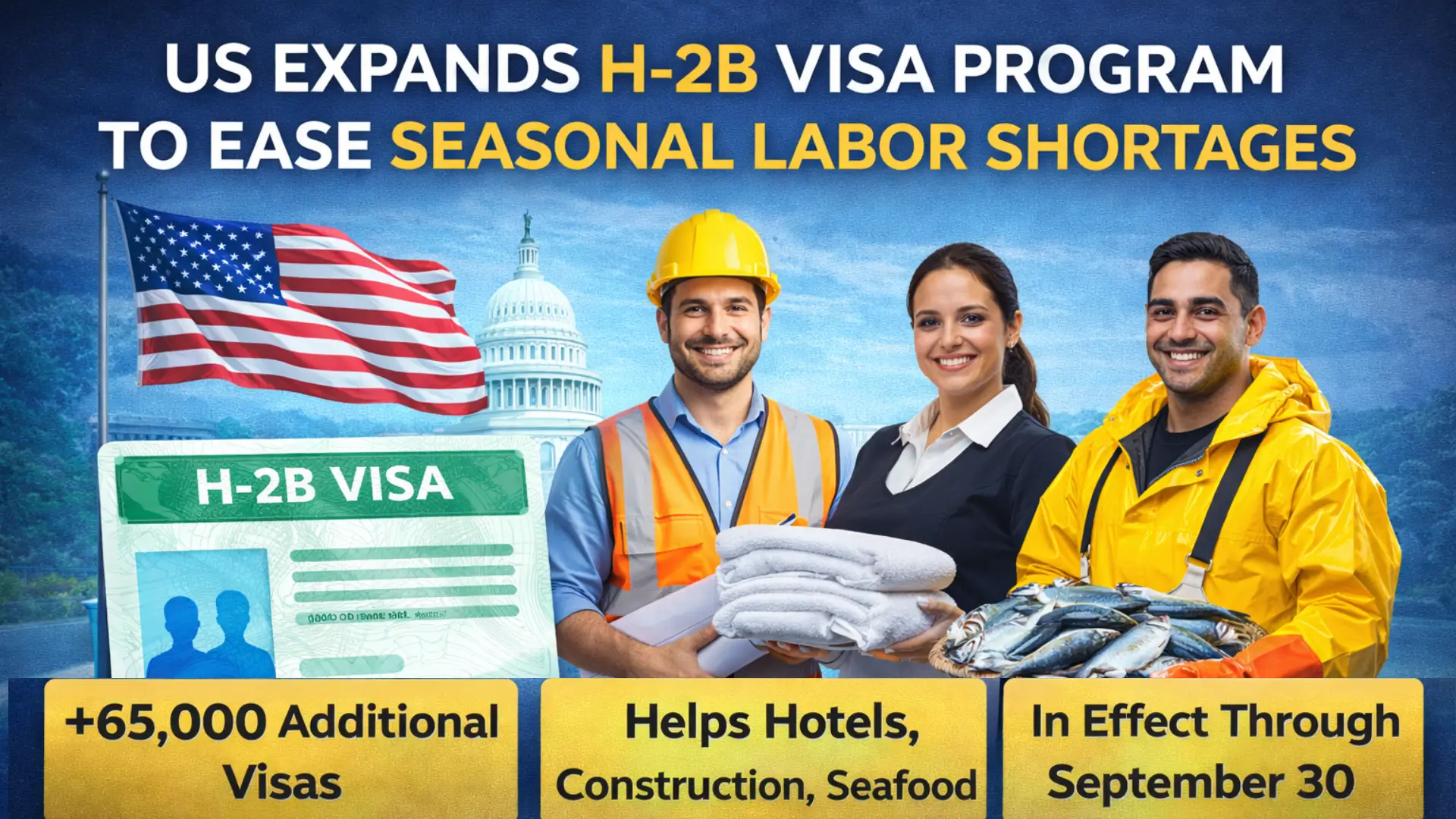

US Expands H-2B Visa Program. The Trump administration has announced a significant expansion of the H-2B seasonal guest worker visa program, increasing the number of available visas by 65,000. This move is aimed at addressing the severe labor shortages faced by U.S. employers in industries such as construction, hospitality, landscaping, and seafood processing. With these additional visas, the total number of H-2B visas for the current year will nearly double, providing temporary relief to businesses struggling to fill essential positions.
H-2B Visa Expansion Explained
The H-2B visa program allows U.S. employers to hire foreign workers for short-term, non-agricultural positions. These visas are crucial for industries that rely on seasonal labor, particularly during peak seasons when demand increases.
This expansion will directly impact several key sectors that are dependent on a steady flow of temporary workers:
- Construction companies that need workers for projects during peak building seasons.
- Hospitality businesses, particularly hotels, struggling to meet staffing demands.
- Landscaping firms that require additional help during peak gardening and lawn care months.
- Seafood processing plants that face increased labor needs during harvest seasons.
The additional 65,000 visas are expected to help employers meet their staffing needs, especially in industries that cannot find enough domestic workers to fill these seasonal positions.

Temporary Measure to Address Labor Shortages
This visa expansion is a temporary measure that will remain in effect until September 30, 2026. The Federal Register notice outlined that the 65,000 additional H-2B visas will be allocated specifically for businesses that are experiencing financial hardship due to a lack of available domestic workers.
The Need for Additional Visas
The decision to increase the number of available H-2B visas comes after ongoing complaints from employers across various sectors who have struggled to fill seasonal positions. Hotels have been particularly affected, facing challenges in hiring staff for housekeeping, cooking, and maintenance roles. Similarly, construction companies have struggled to find enough laborers to keep up with the demand for building projects.
By providing these additional visas, the government aims to ease these labor shortages and ensure that businesses can continue to operate smoothly during peak seasons, preventing potential financial setbacks due to lack of manpower.

Critics and Supporters of the Expansion
While the expansion of the H-2B visa program is widely seen as a necessary response to labor shortages, it has also sparked a debate between critics and supporters of the program.
Critics’ Concerns
Critics argue that the expansion of the H-2B visa program could have a negative impact on the wages of U.S. workers. They argue that the influx of temporary foreign workers could lead to lower wages for U.S. citizens in similar industries. Additionally, they express concerns that hiring foreign workers might displace American workers who are willing to take on seasonal positions.
Some opponents suggest that instead of increasing the number of foreign workers, the government should focus on improving domestic workforce participation, particularly by providing incentives for U.S. citizens to take on these seasonal jobs.

Supporters’ Viewpoint
On the other hand, proponents of the H-2B visa program argue that these temporary workers are essential for industries that rely heavily on seasonal labor. They contend that without access to foreign workers, many businesses would struggle to operate, leading to a slowdown in critical services. For instance, hotels would face staff shortages, landscapers wouldn’t be able to meet seasonal demand, and construction projects could face delays.
Supporters also emphasize that the H-2B visa is designed to meet specific labor needs that domestic workers are not always available for, especially during peak seasons. They argue that this program helps keep businesses afloat and ensures that essential industries can continue to function smoothly.
H-2B Program’s History and Expansion
This latest expansion follows previous increases in the number of available H-2B visas under both the Trump and Biden administrations. The need for additional seasonal workers has been an ongoing concern, with the program experiencing several expansions over the years.

The decision to increase the number of H-2B visas comes after several years of discussions and negotiations within the government, balancing the need for temporary workers with concerns over the impact on the domestic labor market.
Future of the H-2B Visa Program
While the current expansion of the H-2B program is a temporary solution, the future of the program will depend on several factors.
Potential for Future Increases
If the seasonal labor shortages persist, it is likely that the H-2B visa program could continue to expand. The government may introduce further increases in the number of available visas in subsequent years, especially if businesses continue to report difficulties in hiring workers.

Ongoing Concerns About Wage Impact
Despite the short-term relief the H-2B visas provide, there will likely continue to be debates about the long-term effects on U.S. workers. The government will need to monitor the program carefully to ensure that it does not negatively impact wages or displace domestic workers.
H-2B Visas: A Lifeline for Many U.S. Industries
The H-2B program has long been a lifeline for industries that rely on seasonal labor. By allowing foreign workers to temporarily fill key positions, the program ensures that businesses can meet demand and continue to provide services to the public. Without this influx of seasonal workers, industries such as construction, hospitality, and landscaping would face significant challenges, potentially leading to delays in projects and a decline in service quality.
For businesses that rely heavily on temporary labor, the H-2B visa expansion is a welcome relief. However, as with all policy changes, the expansion must be balanced to ensure that it benefits both employers and U.S. workers.
Conclusion
The expansion of the H-2B visa program is a timely and necessary response to the seasonal labor shortages faced by industries across the U.S. By adding 65,000 additional visas, the government aims to provide relief to businesses in need of temporary workers. However, the program continues to spark debate regarding its potential impact on wages and domestic employment. As the country navigates these challenges, the H-2B visa program will remain a key factor in ensuring the success and sustainability of U.S. industries that rely on seasonal labor.