
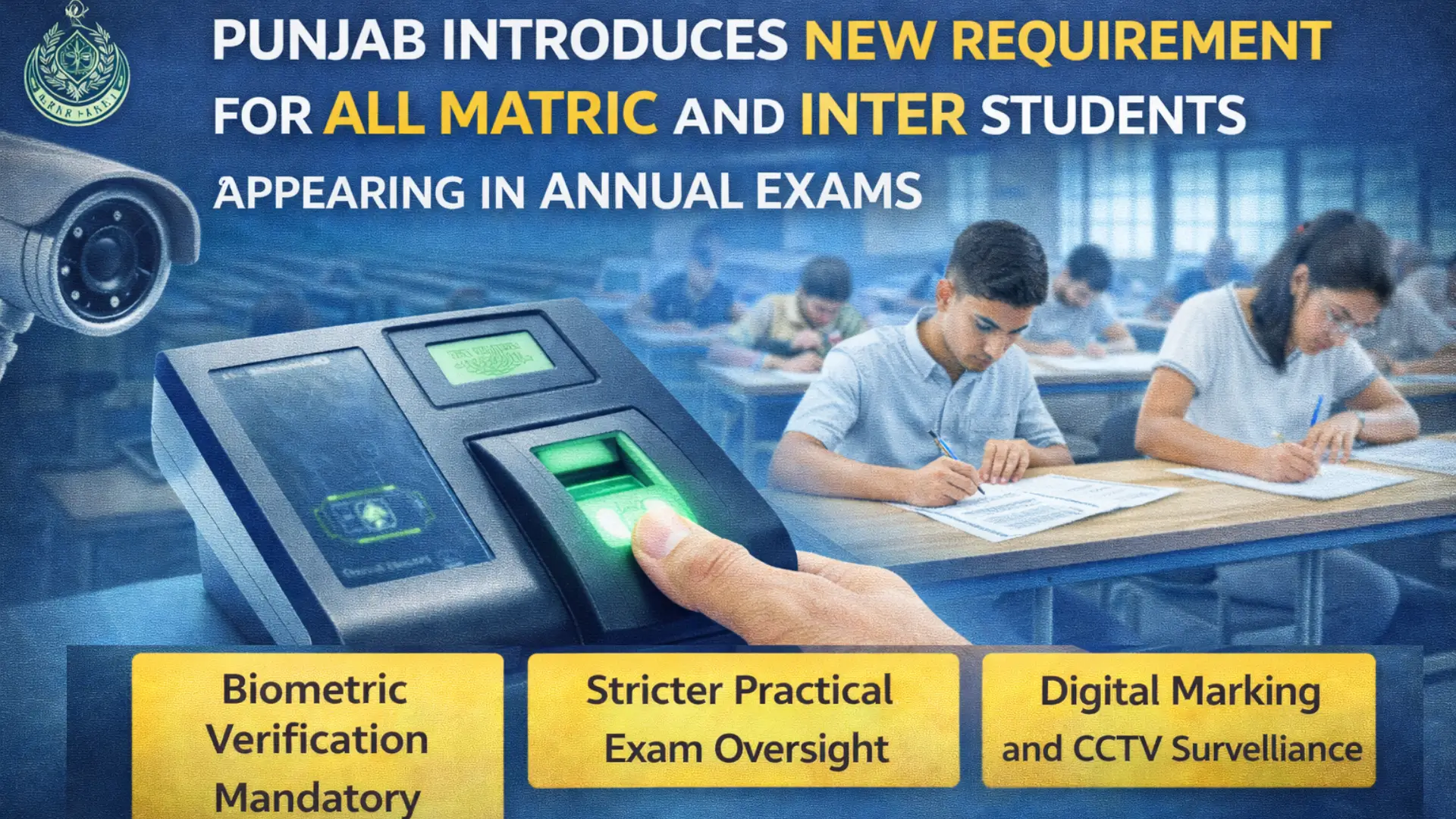

New Requirement for All Matric and Inter Students. In an effort to modernize the examination system and ensure fair play, Punjab has introduced a new requirement for students appearing in the 2026 Matriculation and Intermediate examinations. Digital biometric attendance verification will now be implemented to ensure the authenticity of candidates appearing for the exams.
This move is part of a larger series of reforms aimed at improving the examination system in the province. The decision was finalized after a high-level meeting of the Board of Intermediate and Secondary Education (BISE) Lahore, where education officials discussed the much-needed updates to the current system.
Key Change: Biometric Attendance Verification
The introduction of biometric verification marks a significant departure from traditional attendance practices. Students appearing for the Matriculation and Intermediate exams in Punjab will now have their identities verified digitally before entering the examination halls.
Ensuring Authenticity and Preventing Impersonation
The goal of biometric verification is clear: to ensure that only registered candidates are allowed to sit for the exams. By using fingerprint scanning technology, the system will digitally verify the identity of each student at the examination centers. This will effectively block any fake candidates from entering the exam halls and ensure that the exam process remains transparent and authentic.

Reforms in Practical Exams
Another major aspect of the reform agenda is the overhaul of the practical examination system. Officials have acknowledged long-standing issues with practical exams, including complaints about unfair marking, favouritism, and poor oversight. In response, the new proposal aims to make practical exams as rigorous and standardized as theory exams.
Standardized Assessment Criteria
Under the new reforms, standardized assessment criteria will be introduced for practical exams across all boards in Punjab. This means that the marking system will be more consistent, with reduced chances for subjective grading. Students will now be evaluated based on uniform guidelines, ensuring that every student is graded fairly.
CCTV Surveillance and Digital Monitoring
To further tighten security and ensure fair conduct during practical exams, the government has proposed the installation of CCTV cameras in laboratories. This measure aims to curb cheating, external interference, and the widespread culture of recommendations.

Enhanced Monitoring System
The CCTV surveillance will provide continuous monitoring during practical exams, allowing authorities to keep a close eye on any irregularities or cheating attempts. This move is designed to ensure that practical exams are conducted with the same level of scrutiny and fairness as the theory papers.
Digital Marking System
In addition to the increased surveillance, a digital marking system is also under consideration. Under this model, both theory and practical marks will be entered electronically, eliminating the risk of manual handling, tampering, and human error. This digital approach will enhance the transparency of the grading process and reduce any possibilities of corruption or manipulation.
Compensation for Examination Supervisors
The issue of supervisor compensation has also been addressed in the recent reforms. Education officials believe that better pay for exam supervisors and staff will reduce their vulnerability to external pressures, such as bribery or political influence.

Encouraging Honest Work
By improving compensation, the government aims to encourage honest performance of duties. Supervisors will be more inclined to carry out their responsibilities with integrity, knowing that they are fairly compensated for their hard work. This will help create a more transparent and trustworthy examination process for all students.
Legal Measures Against Corruption
Muzammil Mehmood, the Chairman of the Task Force Committee on Boards, emphasized that the new reforms reflect a zero-tolerance policy towards corruption in the examination system. He stated that legal action will be taken against anyone found using bribery, political influence, or personal connections to manipulate exam results.
A Strict Stance on Unethical Practices
This strong stance is aimed at eliminating unethical practices that have long been a part of the examination system. Students who previously felt disadvantaged due to the lack of influence or recommendations will benefit from the fairer system now being implemented.

More Transparent and Credible Examination System
With biometric verification, digital marking, CCTV surveillance, and standardized assessments, the reforms aim to bring about a more transparent and credible era for Punjab’s education boards. The introduction of these changes will help ensure that hardworking students are not unfairly disadvantaged and that the exam results reflect true merit.
Positive Change for Punjab’s Education System
The new measures are expected to boost students’ confidence in the examination process, as they will no longer have to worry about unfair practices affecting their chances. The government hopes that these reforms will not only enhance the quality of education in the province but also foster a sense of justice among students and parents.
Timeline and Implementation
The 2026 exam season will mark the first time these reforms are implemented, and officials have assured that detailed technical guidelines and implementation plans will be shared with schools and examination centers well in advance. This will ensure that all parties involved in the examination process are prepared for the changes and that there are no delays or disruptions.

Timely Completion of Exam Preparations
The government is committed to completing the construction of biometric verification systems and CCTV installations before the start of the exam cycle. The installation of 470 bus shelters and other infrastructure for exam centers will be done efficiently and on time.
Conclusion
The new reforms introduced by the Punjab government, including biometric verification, digital monitoring, and standardized assessments, represent a transformative shift in the way examinations are conducted in the province. These measures will help ensure that the examination process is fair, transparent, and free from corruption.
The changes are designed not only to improve the integrity of the system but also to provide peace of mind for students and their families. With a stronger emphasis on accountability and modernization, the 2026 exam cycle in Punjab is set to usher in a new era of education reform.