
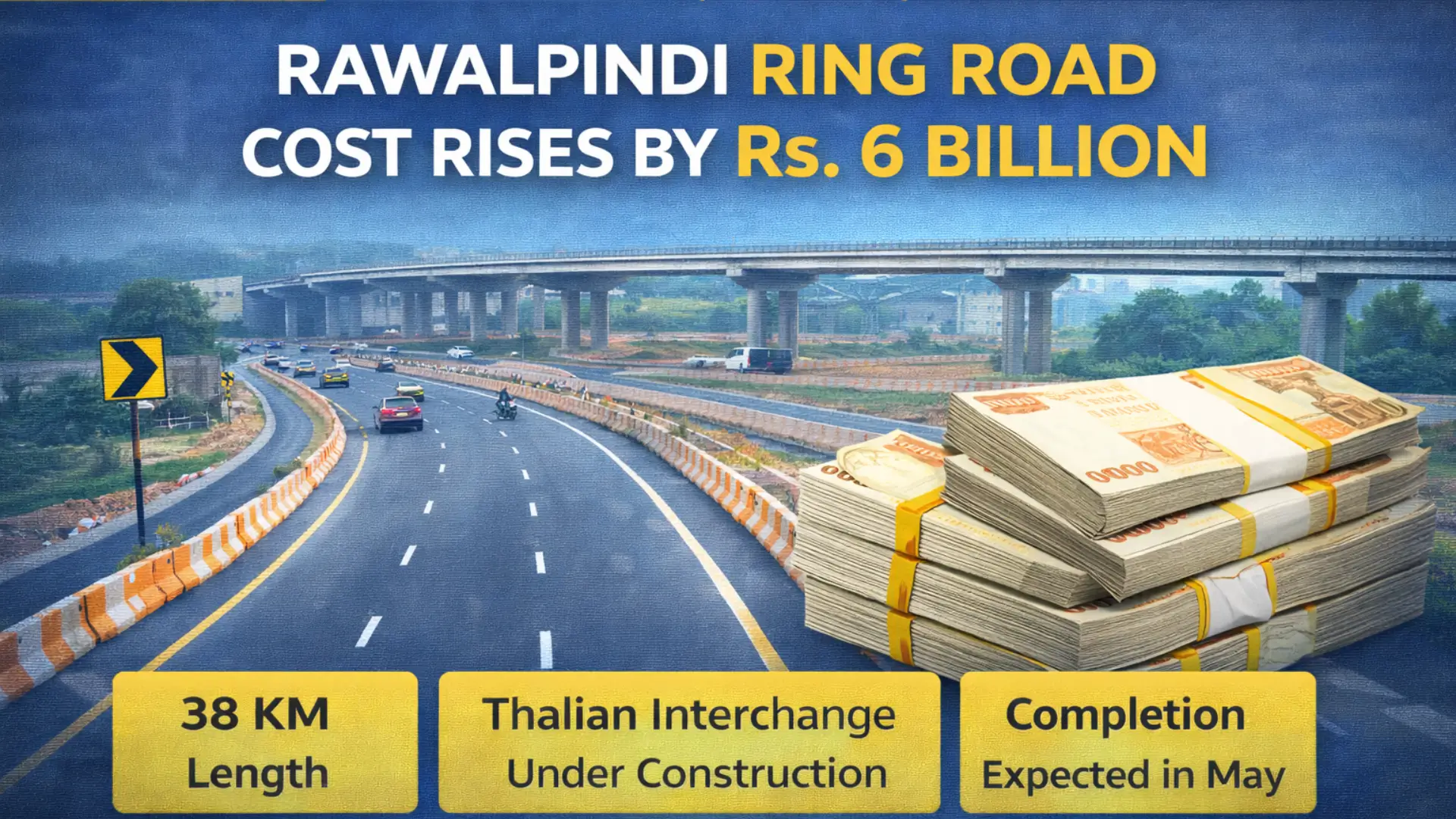

Rawalpindi Ring Road Cost Rises by Rs. 6 Billion. The much-awaited Rawalpindi Ring Road project, a key infrastructure development for the city, has seen another rise in its estimated cost. The initial estimated cost of the 38-kilometre project has now increased by an additional Rs. 6 billion, pushing the total cost beyond Rs. 53 billion. Officials expect the final cost to exceed Rs. 55 billion by the time the project is completed.
This cost escalation has sparked concerns among citizens and lawmakers alike, especially considering the project was initially approved in 2004 with an estimated cost of Rs. 17 billion. The Punjab Planning and Development Board is likely to approve the revised cost in the first week of February 2026, after receiving justifications from the Rawalpindi Development Authority (RDA) and the Project Management Unit regarding the increased expenditure.
Rawalpindi Ring Road Project
The Rawalpindi Ring Road is a major infrastructure initiative aimed at improving traffic flow and reducing congestion in the city. The six-lane ring road spans 38.3 kilometres, connecting various key areas around Rawalpindi. The road is designed to ease the burden on the city’s existing roads and provide a more efficient route for commuters and goods transportation.
Key Features of the Project
- Length: 38.3 kilometres
- Lanes: Six lanes to accommodate growing traffic demands
- Interchanges: Five interchanges at Banth, Chak Beli Khan, Adiala Road, Chakri Road, and Thalian
- Bridges: All small and large bridges, including the railway bridge, have been completed.
The project aims to provide a smoother and faster route for traffic, especially between the airport, industrial zones, and commercial areas, significantly reducing travel time and congestion in Rawalpindi.

Cost Escalations Over the Years
The Rawalpindi Ring Road project has faced repeated cost escalations since its approval in 2004. Initially, the project was approved with a modest cost of Rs. 17 billion. However, as with many large infrastructure projects, the costs have steadily increased over the years due to factors such as:
- Inflation
- Changes in project scope
- Rising construction material prices
Now, the total cost is expected to exceed Rs. 55 billion by the time the project is fully completed, marking a more than threefold increase from the original estimate.
Current Progress of the Project
Despite the rising costs, progress on the Rawalpindi Ring Road has been significant. Authorities have already completed 80% of the carpeting work, and traffic has started using several sections of the road, providing some relief to commuters. The fact that parts of the road are already operational is a testament to the scale and importance of the project.

One of the critical components of the project is the Thalian Interchange, which links the ring road with the motorway. This interchange, costing Rs. 5 billion, is currently under construction. Once completed, it will be a key point of access for travelers moving between Rawalpindi and Islamabad, reducing travel time significantly.
Beautification and Environmental Considerations
Along with the road construction, authorities are also focusing on plantation and beautification work along both sides of the ring road. These efforts are aimed at improving the visual appeal of the road and contributing to environmental sustainability. The authorities have planned to:
- Plant 300,000 trees and saplings along the road.
- Install computerized LED lights to enhance safety and provide better visibility at night.
These green initiatives will not only enhance the aesthetics of the road but also help reduce the environmental impact of the project.

Industrial and Commercial Development
The Rawalpindi Ring Road project is not only about improving transportation but also about promoting economic growth in the region. Authorities have planned for industrial zones and commercial areas along the ring road, opening up new opportunities for businesses and industries.
One of the key aspects of this development is the potential for multi-story buildings. Authorities plan to allow construction of buildings up to 10 storeys along the road, which will increase the availability of office space, retail locations, and residential areas. This will further contribute to the economic dynamism of the area and attract investment from both domestic and international sources.
Path Ahead: Finalizing Construction
As the project nears its completion, officials are focused on ensuring that the remaining work is finished on time and to the highest standards. Rawalpindi Commissioner Aamir Khattak has directed the relevant departments to prioritize the completion of the remaining work and ensure that all the bridges are activated and the beautification work is finalized by April 30, 2026.

The formal inauguration of the Rawalpindi Ring Road is scheduled for the first week of May 2026, marking the end of a long and often challenging journey for the project. Once completed, the road is expected to revolutionize transportation in Rawalpindi, providing a modern, efficient route for commuters and goods.
Impact on Local Traffic and Economy
The completion of the Rawalpindi Ring Road will have a profound impact on the city’s traffic and economy. By alleviating congestion on the existing roads and providing a more efficient route for vehicles, the project will reduce travel times and make transportation more efficient for both individuals and businesses.
Additionally, the industrial and commercial development planned along the ring road will boost economic activity in Rawalpindi and the surrounding areas, creating new jobs and attracting investment.

Conclusion
The Rawalpindi Ring Road project represents a major investment in the city’s infrastructure and future growth. Despite the rising costs, the project is expected to provide long-term benefits by improving traffic flow, enhancing connectivity, and stimulating economic development in the region.