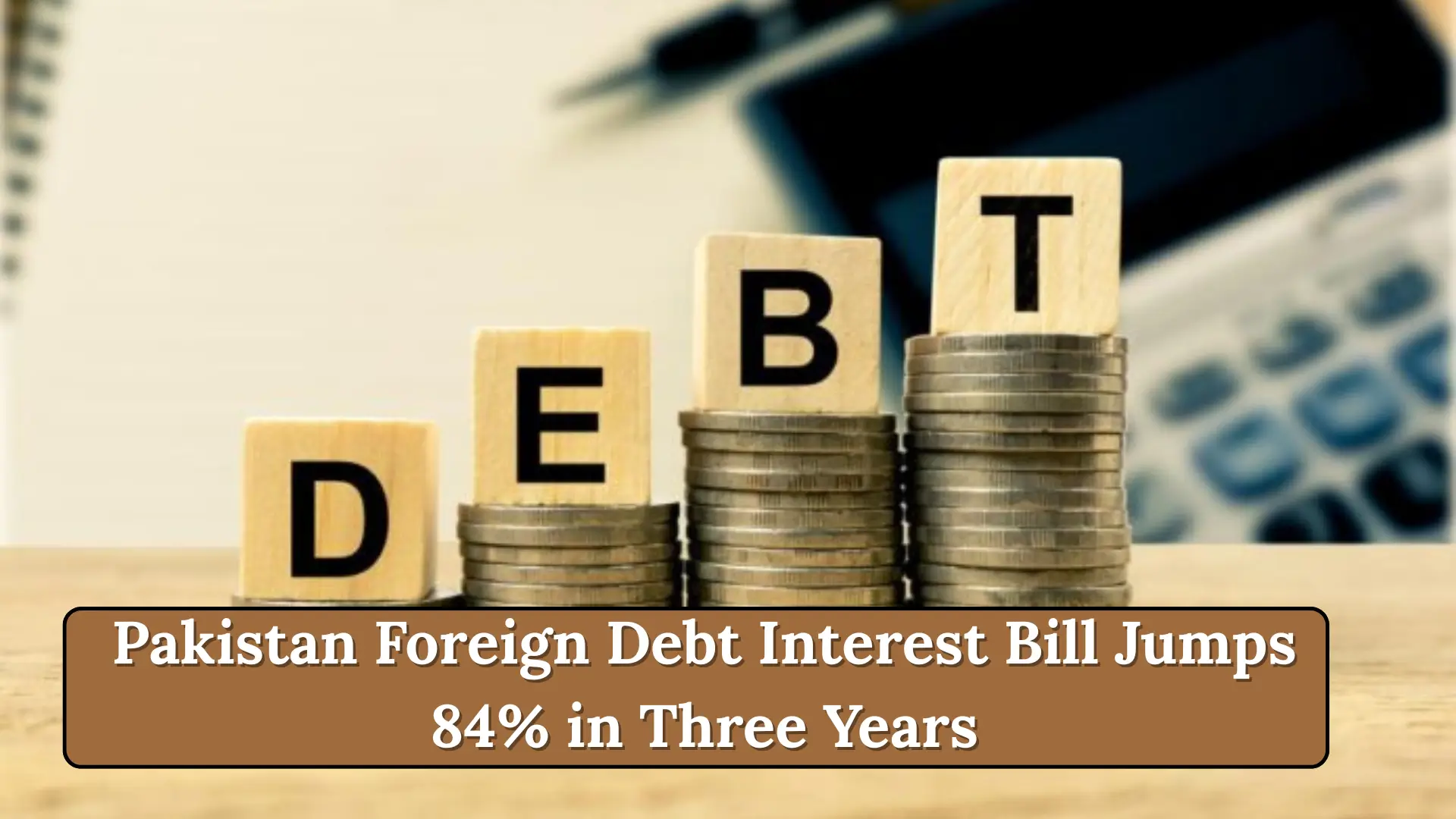

Pakistan Foreign Debt Interest Bill Jumps 84%. Pakistan’s payments on interest for foreign loans have surged dramatically over the past three years, increasing by 84 percent to reach $3.59 billion. The sharp rise highlights the growing financial burden of external borrowing and the increasing pressure on the country’s public finances.
According to official data, higher global interest rates and greater reliance on expensive commercial loans have significantly contributed to the increase in debt servicing costs. The trend reflects the broader economic challenges Pakistan faces as it works to stabilize its economy.
Rising Cost of Foreign Borrowing
Officials say that one of the primary reasons behind the jump in interest payments is Pakistan’s increased dependence on commercial loans. Unlike concessional loans from multilateral institutions, commercial loans typically carry higher interest rates and shorter repayment periods.
In addition, global interest rates have remained elevated in recent years, pushing up borrowing costs worldwide. As international lenders tightened monetary policies to control inflation, developing countries like Pakistan were forced to pay more to access foreign funds.
The 84 percent increase in interest payments demonstrates how external borrowing has become significantly more expensive for the country.

Foreign Debt Crosses $138 Billion
Despite government efforts to stabilize the economy through fiscal reforms and negotiations with international partners, pressure on public finances continues to mount.
Official figures show that Pakistan’s total external debt and liabilities crossed $138 billion by December 2025. Out of this amount, public external debt stood at over $91 billion as of June 2025.
The growing debt stock means higher repayment obligations in the coming years, increasing the strain on the national budget.
$13.32 Billion Paid in Debt Servicing During FY2025
During the fiscal year 2025, Pakistan paid a total of $13.32 billion to service its foreign debt. This amount includes both principal repayments and interest payments.
The breakdown is as follows:
- $9.73 billion in loan repayments (principal amount)
- $3.59 billion in interest payments
These significant outflows have put heavy pressure on government finances, limiting the availability of funds for development projects, social welfare programs, and public services.
Major Payments to International Institutions
A large portion of Pakistan’s repayments went to multilateral financial institutions and friendly countries.
Among the key payments made during the fiscal year:
- $2.10 billion was paid to the International Monetary Fund
- $1.54 billion was paid to the Asian Development Bank
- $1.25 billion was paid to the World Bank
In addition to these institutions, Pakistan also made repayments to China and Saudi Arabia, including interest on deposited funds and bilateral loans.
These repayments reflect Pakistan’s heavy reliance on multilateral and bilateral partners to meet its external financing needs.
Commercial Loans Remain Expensive
Commercial borrowing has proven particularly costly for Pakistan. During the year, the country paid around $3 billion under commercial loans, including $327 million in interest alone.
Commercial loans often carry interest rates ranging between 3 percent and 8 percent, depending on market conditions and loan agreements. Compared to concessional loans, these rates are significantly higher, increasing the long-term cost of borrowing.

Economists warn that excessive reliance on commercial loans can expose the country to financial risks, especially during periods of global economic uncertainty.
Payments Under Naya Pakistan Certificates
Payments under Naya Pakistan Certificates also added to the overall debt burden. During the fiscal year, total payments under the scheme reached $1.56 billion, including $188 million in interest.
These certificates were introduced to attract overseas Pakistani investment, but servicing them has added to the country’s external financial obligations.
New Borrowing Continues Despite Large Repayments
Even after making substantial repayments, Pakistan continued to take on new foreign loans. During the fiscal year 2025, the country borrowed $10.64 billion in fresh external loans.

The breakdown of new borrowing includes:
- $8.65 billion allocated for federal government projects
- $1.98 billion used for provincial development projects
Because new borrowing exceeded repayments, net external debt increased by $1.71 billion over the year.
This trend indicates that while Pakistan is repaying old debt, it continues to rely on new loans to finance budget deficits and development needs.
Debt Costs Remain a Major Economic Challenge
With foreign debt crossing $138 billion and interest payments rising sharply, debt servicing has become one of the most significant challenges for Pakistan’s economy.
Rising debt obligations reduce the government’s fiscal space, leaving less money available for education, healthcare, infrastructure, and poverty alleviation programs. Economists caution that unless export earnings increase and fiscal reforms are strengthened, the country may remain dependent on external financial support.
Most of Pakistan’s foreign debt is owed to multilateral lenders such as the IMF, World Bank, and Asian Development Bank, along with deposits from China and Saudi Arabia. While these partnerships provide essential financial assistance, the growing repayment burden underscores the need for sustainable economic growth and improved revenue generation.
Conclusion
The 84 percent rise in Pakistan’s foreign debt interest bill over the past three years highlights the increasing cost of external borrowing. With total external debt exceeding $138 billion and billions paid annually in repayments and interest, managing debt has become a central economic challenge.