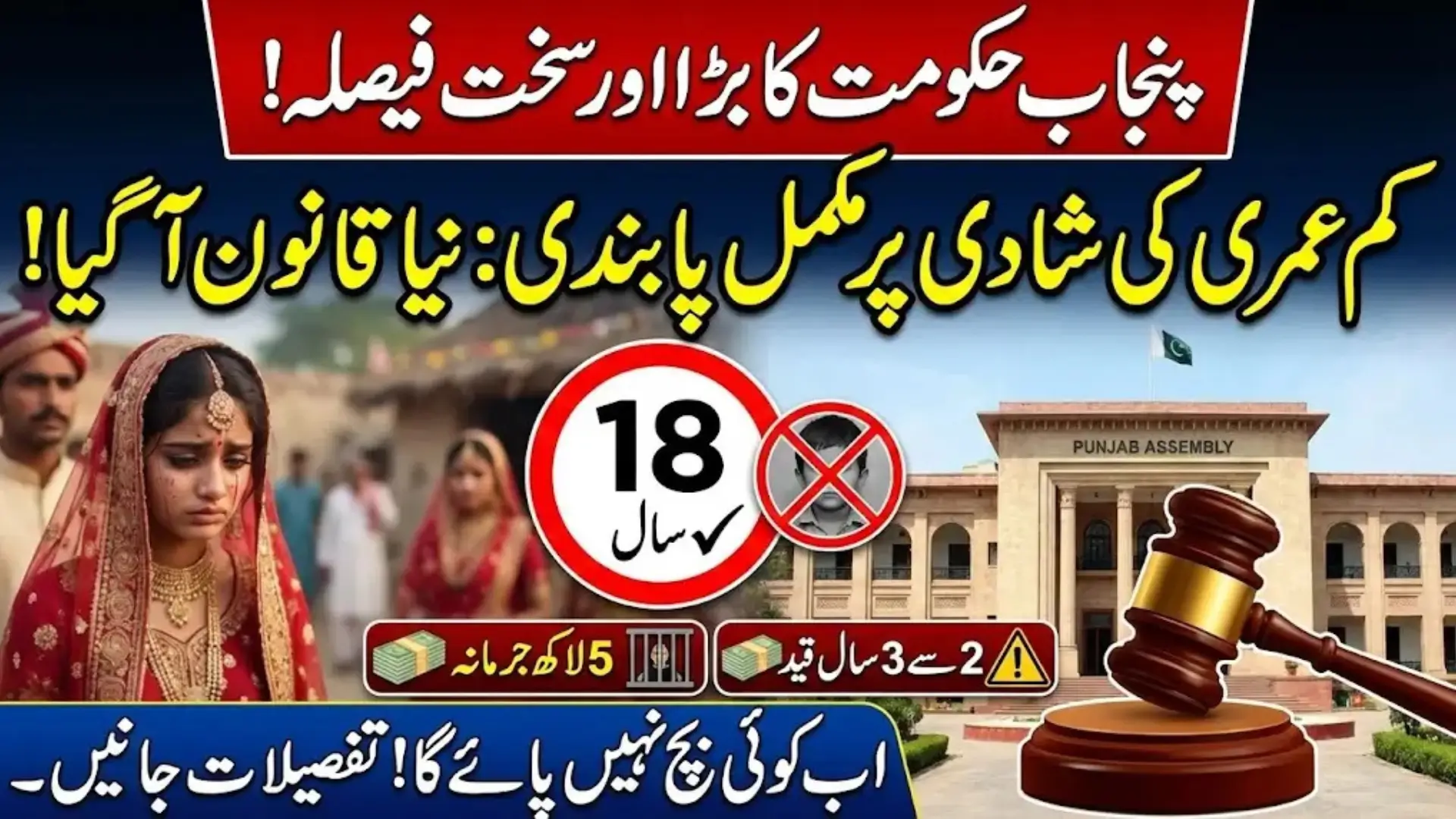

Criminalize Child Marriage. The Punjab government has announced plans to criminalize marriages involving individuals under the age of 18 through a new ordinance, aiming to curb the widespread issue of child marriage across the province. This move reflects growing concern over the negative social, health, and educational impacts of child marriages on young girls and boys.
According to reports, the proposed Child Marriage Restraint Ordinance will be presented in the next session of the Punjab Assembly. The law is expected to align provincial regulations with federal legislation while imposing stricter penalties on violators.
Key Provisions of the Draft Ordinance
The draft ordinance introduces several measures to prevent child marriages and penalize offenders:

- Marriage of Minors Prohibited: Any person aged 18 or older who marries a minor will face a minimum of two years in prison and a fine of up to Rs. 500,000.
- Targeting Facilitators: Parents or guardians who arrange, assist, or facilitate such marriages can face two to three years in prison, reflecting the government’s commitment to addressing not only the direct offenders but also those who encourage child marriage.
- Cohabitation Considered Child Abuse: In a significant provision, the ordinance declares that cohabitation or a conjugal relationship with a minor after marriage will be treated as child abuse. Offenders may face five to seven years in prison and a minimum fine of Rs. 1 million.
These measures are designed to ensure a comprehensive approach against child marriage by penalizing all parties involved, including those who attempt to circumvent the law.
Legal Procedures and Court System
The ordinance stipulates that all cases registered under this law will be tried in sessions courts, which are required to complete trials and deliver verdicts within 90 days. This strict timeline is intended to ensure swift justice for victims and prevent prolonged legal battles that often undermine the effectiveness of child protection laws.

Additionally, if a court becomes aware of an underage marriage being arranged or already conducted, it may issue an order to stop the marriage immediately. Individuals reporting such cases can request confidentiality, and the court is mandated to protect their identity and safety.
Role of Nikah Registrars
Under the new ordinance, Nikah registrars will be prohibited from solemnizing marriages if either party is under 18. Any registrar who violates the law may face up to one year in prison and a fine of Rs. 100,000. This ensures that official channels for marriage registration strictly adhere to the minimum age requirement and discourages illegal marriages from being formally recorded.

Alignment with Federal and Sindh Laws
The Punjab initiative is part of a broader effort across Pakistan to address child marriage. In May of the previous year, Parliament passed the Child Marriage Restraint Bill, which set 18 as the minimum legal age for marriage nationwide. Under federal law, a man over 18 who marries an underage girl can face up to three years of rigorous imprisonment.
Similarly, Sindh province already has legislation in place criminalizing child marriages. By introducing this ordinance, Punjab aims to bring provincial laws in line with federal standards while introducing stricter penalties and procedural safeguards.

Social Impact of Child Marriage
Child marriage has long been recognized as a serious violation of human rights, affecting the education, health, and overall development of children, particularly girls. Studies show that early marriage often leads to:
- Increased risk of maternal and infant mortality
- Limited educational opportunities
- Higher chances of domestic abuse
- Long-term psychological and social challenges
By criminalizing child marriage, the Punjab government seeks to protect children’s rights, promote gender equality, and encourage families to prioritize education over early marriage.

Support and Awareness Mechanisms
The draft ordinance also emphasizes the importance of awareness campaigns. Courts will ensure protection for individuals reporting child marriages, and local authorities are expected to educate communities about the legal age of marriage. NGOs and social organizations are likely to play a role in monitoring compliance and supporting victims.
This proactive approach is intended to change societal attitudes, as laws alone are often insufficient without public awareness and community engagement.
Conclusion
The Punjab government’s move to criminalize child marriage through a new ordinance represents a significant step in protecting children’s rights and aligning provincial laws with federal legislation. With strict penalties for offenders, legal safeguards for reporters, and a focus on preventing cohabitation with minors, the ordinance is designed to curb the prevalence of child marriage across the province.