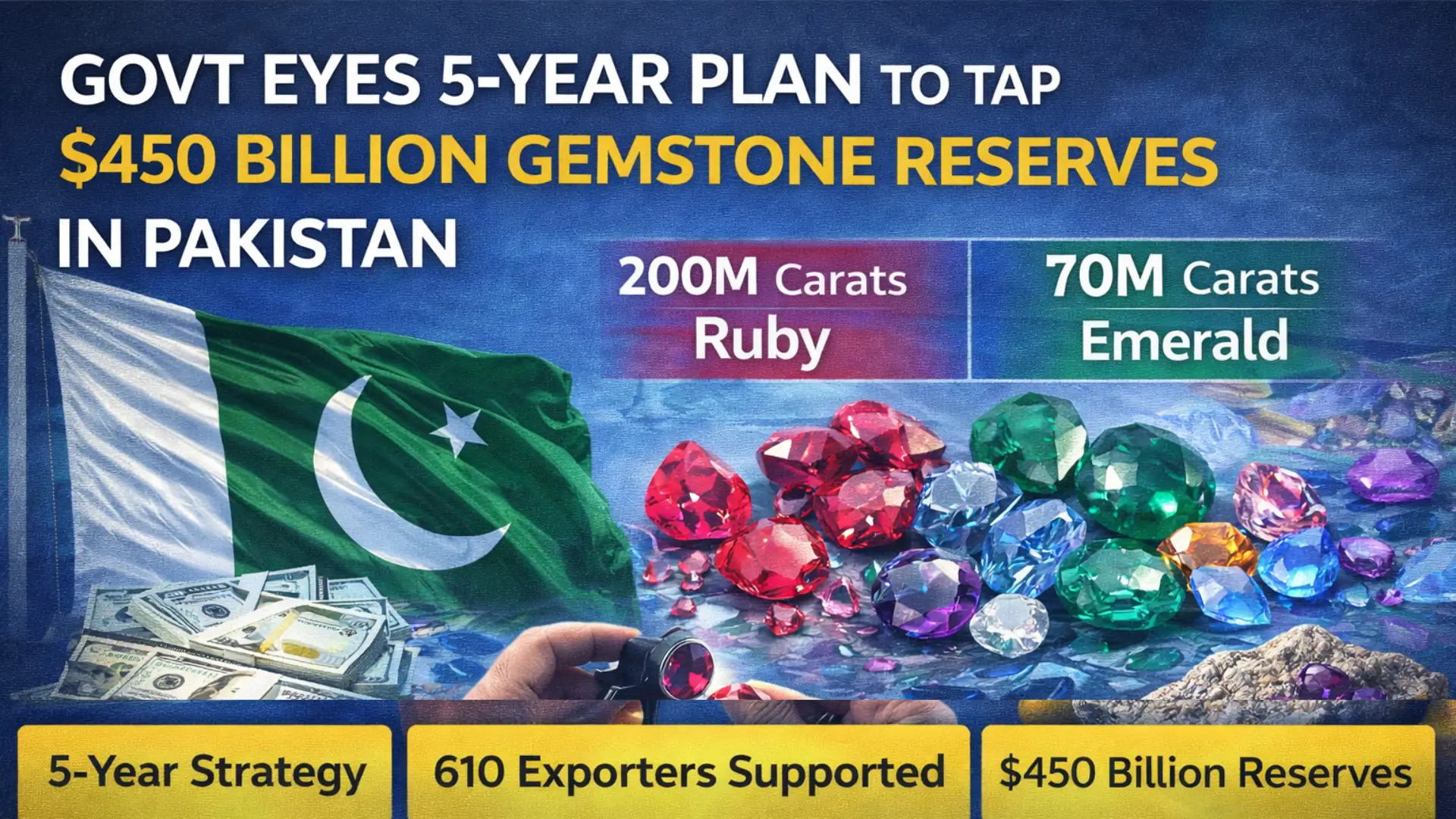

Govt Eyes 5-Year Plan to Tap $450 Billion. In a significant move aimed at unlocking the economic potential of Pakistan’s vast gemstone reserves, the federal government has decided to introduce a comprehensive five-year plan to regulate and expand the country’s $450 billion precious stones market. The plan aims to formalize the trade of gemstones and bring billions of dollars worth of precious stones into formal trade channels. This initiative is expected to provide a major boost to Pakistan’s economy, strengthen the sector, and improve the livelihoods of thousands of people involved in the gemstone industry.
Untapped Potential of Pakistan’s Gemstone Market
Pakistan is home to a staggering wealth of precious stones, valued at over $450 billion. These reserves include some of the world’s most coveted gemstones, such as ruby and emerald. According to government estimates, Pakistan possesses approximately:
- 200 million carats of ruby
- 70 million carats of emerald
In addition to these, there are various other types of gemstones found across the country, including sapphires, topaz, and tourmaline. Despite the immense value of these resources, the gemstone sector in Pakistan has long been underdeveloped and informal. A large percentage of the gemstones mined in Pakistan remain outside the formal trade system, resulting in lost revenue and missed opportunities for both the government and local communities.
Key Elements of the 5-Year Plan
The newly announced five-year plan is aimed at tapping into the potential of these valuable resources. The government has set clear objectives to modernize the sector, create a transparent trade environment, and improve the export of gemstones. Some of the key elements of the plan include:

1. Facilitating Exporters and Access to Global Markets
One of the primary goals of the plan is to facilitate 610 exporters over the next five years. This will be achieved by:
- Providing access to international exhibitions
- Connecting exporters to global markets
The plan will ensure that Pakistan’s gemstone exporters can reach global markets more easily, improving the visibility and profitability of local gemstones. By participating in international exhibitions and trade shows, Pakistan’s gemstones will have the opportunity to be showcased to a wider audience, potentially opening up new export channels and partnerships.
2. Improving Registration, Compliance, and Traceability
The plan aims to address the lack of registration, compliance, and traceability in the gemstone sector. The introduction of a comprehensive registration system will allow for better tracking of gemstones from the point of origin to export. This will not only improve the transparency of the industry but also ensure that gemstones are legally traded, reducing the chances of illegal activities such as smuggling and underpricing.

To enhance transparency, businesses involved in the gemstone sector will be required to register with a central authority, which will also monitor compliance and ensure proper record-keeping.
3. Establishing a Central Authority
A central authority will be established to oversee the gemstone sector’s activities. This authority will be responsible for:
- Business registration
- Provincial coordination
- Facilitating exporters
This central body will include representatives from both the federal and provincial governments and will act as the custodian of the national gemstone policy. It will also serve as a liaison between local miners, exporters, and international buyers, ensuring smooth operations across the sector.

4. Ensuring Safe Return of Unsold Export Consignments
The government has proposed the establishment of an office dedicated to ensuring the safe return of unsold export consignments. This will prevent the risk of gemstones being stuck in foreign markets or being lost in transit. It will also provide security to exporters by offering a guarantee that their unsold goods will be returned, reducing the financial risk associated with international trade.
5. Electronic Payment Gateway Facilities
To modernize the trade and make it more efficient, exporters will be provided with electronic payment gateway facilities. This will help streamline payments and improve the overall transparency of the trade. The introduction of these payment gateways will also reduce the need for cash transactions, making the process more secure and reducing the risk of fraud.
Additional Working Groups to Strengthen the Sector
To ensure the success of the 5-year plan, the government has already formed six dedicated working groups to focus on various aspects of the gemstone industry. These groups will be tasked with developing strategies for:

- Banking and financial reforms: Making it easier for exporters to access financing and credit facilities.
- Refunds for unsold goods: Ensuring that exporters are compensated for unsold gemstones.
- Modernization of mining practices: Introducing advanced mining techniques to increase efficiency and reduce waste.
- Streamlined business registration: Simplifying the process of registering businesses within the sector.
These working groups will collaborate to address the key challenges facing the gemstone industry and implement solutions that will increase profitability and improve global competitiveness.
Expected Economic Impact
The government’s ambitious plan to tap into Pakistan’s $450 billion gemstone reserves is expected to have a significant impact on the economy. The formalization of the gemstone sector will not only generate new job opportunities but also increase the country’s foreign exchange earnings.
By improving registration and traceability, the government aims to add over $60 million in value to the gemstone trade, as more gemstones will be formally accounted for and traded at proper prices. This would not only benefit local miners but also lead to higher tax revenues for the government.

Challenges of Outdated Processing Techniques
One of the main hurdles facing the gemstone sector in Pakistan is the outdated processing techniques used in the industry. Many gemstones are still processed using old and inefficient methods, leading to significant losses. Reports suggest that as much as 70% of the gemstone value is lost during the cutting and polishing stages.
To tackle this issue, the government has prioritized the modernization of mining practices as part of the five-year plan. Introducing advanced cutting, polishing, and refining technologies will not only reduce waste but also improve the overall quality of gemstones, making them more competitive on the global market.
Road Ahead
The introduction of the five-year plan is a positive step toward modernizing Pakistan’s gemstone sector and unlocking the immense potential of the country’s natural resources. However, its success will depend on the effective implementation of policies, the cooperation of various stakeholders, and the ability to adapt to global market trends.
While challenges such as outdated processing techniques and illegal trading practices remain, the government’s focus on improving registration, traceability, and export facilitation is expected to make the sector more transparent and efficient. The establishment of a central authority and the creation of working groups will help streamline operations and ensure that all players in the industry follow the same rules and regulations.
Conclusion
Pakistan’s gemstone industry, with reserves worth over $450 billion, holds enormous potential for economic growth. The government’s decision to introduce a five-year plan to regulate and expand the sector is a step in the right direction. By formalizing the trade, improving mining practices, and providing exporters with access to international markets, Pakistan can transform its gemstone industry into a global leader.