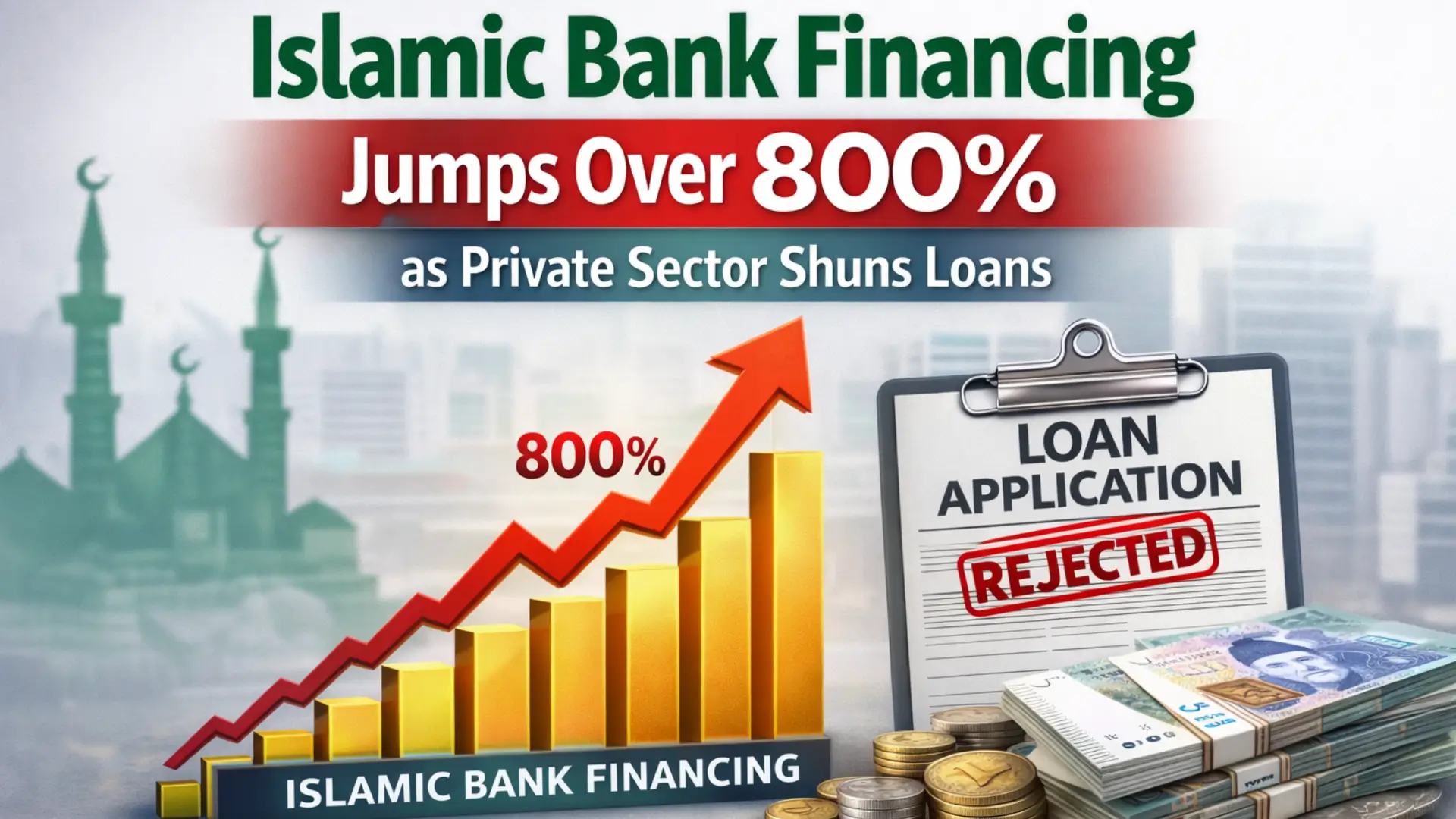

Islamic Bank Financing Jumps Over 800%. Pakistan private sector has sharply reduced borrowing from conventional banks and is rapidly shifting toward Islamic banking, according to fresh data released by the State Bank of Pakistan.
During the first half of the current financial year, businesses repaid loans taken from interest-based banks while securing record financing from Islamic banks. This marks a major change in borrowing behavior across the country.
Private Sector Turns Away from Conventional Banks
Central bank figures show that between July and January 16, businesses obtained Rs. 708 billion in financing from the Islamic banking system. At the same time, the private sector retired Rs. 120 billion worth of loans from conventional banks.

This trend contrasts sharply with the same period last year, when conventional banks had extended Rs. 638 billion in net credit to businesses. The reversal highlights growing reluctance among firms to rely on interest-based financing.
Islamic Banking Branches Lead the Surge
A key driver behind this surge is the rapid expansion of Islamic banking branches operated by conventional banks. Financing through these branches jumped to Rs. 467 billion, compared with only Rs. 50 billion during the same period last year.

In comparison, full-fledged Islamic banks provided Rs. 241 billion in financing, down from Rs. 678 billion in the corresponding months of the previous financial year. This indicates that Islamic windows and branches of conventional banks are capturing a larger share of new demand.
Industry Shift Toward Sharia-Compliant Financing
Banking analyst Ibrahim Amin said Pakistan’s banking industry is gradually moving away from interest-based lending toward Sharia-compliant financing. He explained that relatively lower financing rates and increased trust in Islamic banking products are encouraging businesses to make the switch.

According to Amin, conventional banks have wider branch networks than Islamic banks. As a result, many are actively guiding customers toward their Islamic banking branches and windows as part of a broader transformation strategy.
He added that aggressive marketing campaigns and customer incentives are also accelerating this shift. Competition among Islamic banks and Islamic windows is expected to intensify further in the coming years.

Government’s 2028 Sharia Banking Target
The federal government has officially committed to converting the entire interest-based banking system into a Sharia-compliant model by the end of 2028. This goal follows a landmark ruling by the Federal Sharia Court.
Currently, Pakistan’s Islamic banking industry includes six full-fledged Islamic banks, along with 15 conventional banks offering Sharia-compliant services through dedicated Islamic banking branches.

Policy Support Boosts Banking Liquidity
To support economic activity, the government recently reduced export refinance rates to 4.5 percent. In addition, the central bank lowered the Cash Reserve Requirement, a move aimed at improving liquidity within the banking system.
These policy measures are expected to further support Islamic financing growth while easing pressure on businesses seeking Sharia-compliant funding options.