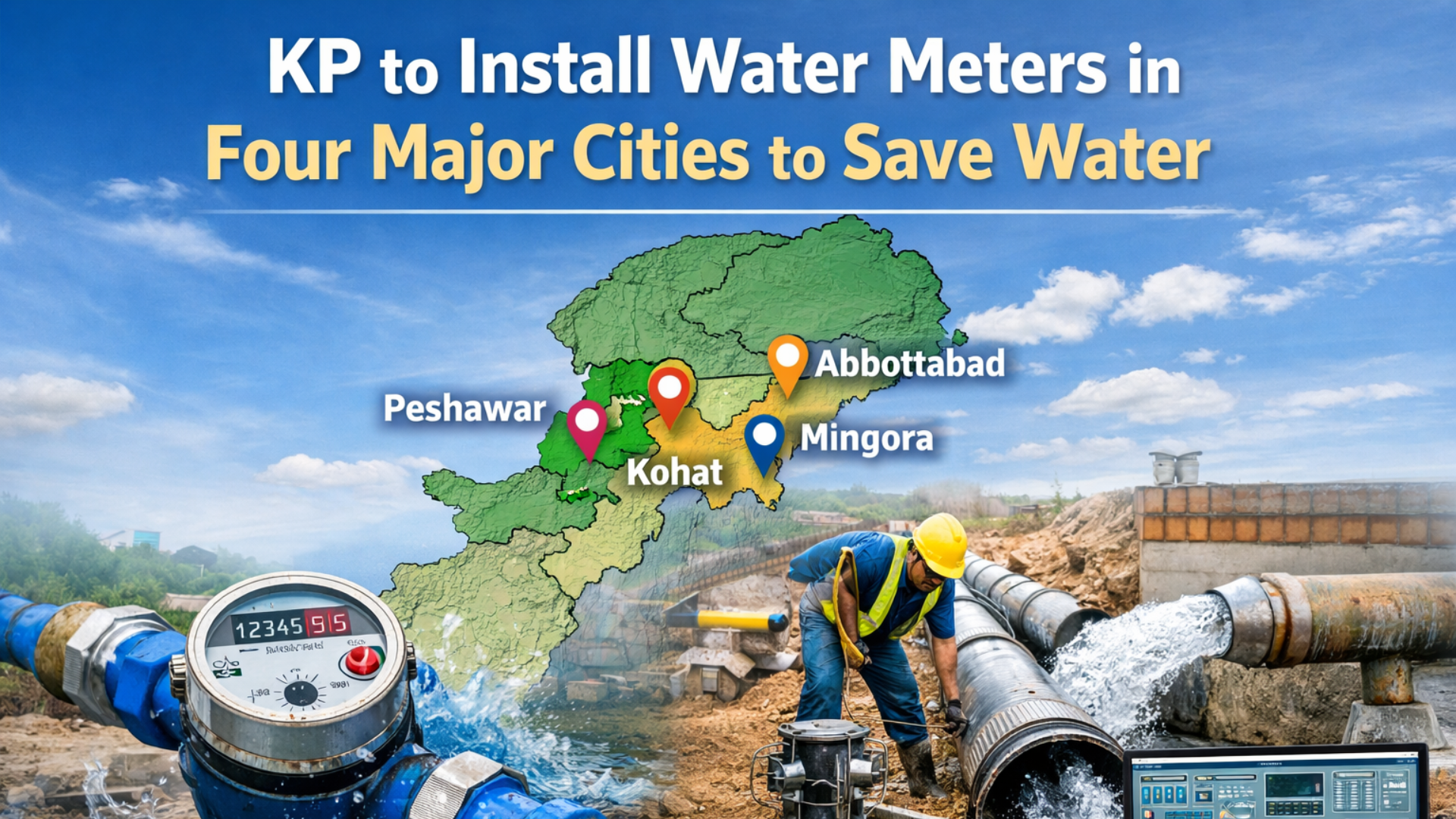

KP to Install Water Meters in Four Major Cities. The Khyber Pakhtunkhwa government has decided to install water flow meters in four major cities.
The goal is simple. Save water. Reduce waste. Improve monitoring.
This step is part of the Khyber Pakhtunkhwa Cities Improvement Project.
Why KP Government Is Installing Water Meters
Water is becoming scarce in urban areas of Khyber Pakhtunkhwa.
Population growth. Climate change. Old pipelines.
All these factors are putting pressure on groundwater.
Water meters will help authorities:
- Measure water usage accurately
- Reduce water wastage
- Control illegal connections
- Improve planning for future demand
This move is important for long-term water security.
Cities Included in the Water Meter Project
The project will be implemented in four major cities:
- Peshawar
- Kohat
- Abbottabad
- Mingora
These cities face serious water shortages, especially during summer.

What Are Water Flow Meters? (Simple Explanation)
A water flow meter is like an electricity meter.
But instead of measuring power, it measures water usage.
Think of it like this.
A water meter is a gatekeeper.
It records how much water enters a home or building.
This helps authorities understand:
- How much water is used
- Where water is wasted
- Which areas need repairs
Installation of SCADA Systems on Tube Wells
Along with water meters, the department is also installing SCADA systems.
What is SCADA?
SCADA means remote monitoring system.
It allows officials to monitor tube wells from one control room.
SCADA systems help by:

- Tracking water extraction in real time
- Reducing power misuse
- Detecting faults early
- Lowering energy costs
This makes water supply systems smarter and more efficient.
Replacement of Old and Rusted Water Pipelines
Old pipelines are a major problem.
Many pipes are rusted, broken, or leaking.
Because of this:
- Clean water is lost
- Supply pressure drops
- Water quality becomes poor
Under this project, large-scale pipeline replacement will be done in all four cities.
New pipelines will:
- Reduce leakages
- Improve water quality
- Increase supply during peak months
- Lower repair costs
Reducing Non-Revenue Water
Non-revenue water means water that is produced but not paid for.
This happens due to:

- Leakages
- Illegal connections
- Faulty meters
- Old infrastructure
Officials said water meters will help reduce this loss.
When water is measured, misuse goes down.
This also improves revenue for water utilities.
Groundwater Levels Under Serious Threat
Authorities warned that groundwater levels are falling fast.
Data from Water and Sanitation Services Companies shows a steady decline.
Reasons include:
- Rapid population growth
- Climate change
- Excessive tube well usage
- Low rainfall
If this continues, water levels may fall below natural recharge capacity.
That means underground water will not refill naturally.
Impact of Climate Change on Urban Water
Climate change is affecting rainfall patterns.
Summers are longer. Winters are shorter.

This leads to:
- Less groundwater recharge
- Higher water demand
- More stress on tube wells
Cities now face water shortages even before peak summer arrives.
Water Demand Is Higher Than Supply
In many areas, water demand already exceeds supply.
Because of this, residents rely on:
- Private borewells
- Water tankers
- Expensive private suppliers
This increases household costs and inequality.
Poor families suffer the most.
Tube Wells Drying Up in Urban Areas
Officials confirmed that several tube wells have dried up.
This is due to excessive groundwater extraction.

When tube wells stop working:
- Supply gaps increase
- Energy costs rise
- Maintenance expenses grow
Water meters and SCADA systems aim to control this issue.
Benefits of Installing Water Meters
For Government
- Better monitoring
- Reduced water losses
- Lower energy costs
- Improved planning
For Citizens
- Fair water distribution
- Improved water quality
- Fewer shortages
- Long-term water security
How This Project Helps the Future
This project is not just about meters.
It is about changing behavior.
When people know water is measured, they use it carefully.
When systems are monitored, wastage reduces.
This creates a culture of conservation.
Challenges the Project May Face
Some challenges may include:
- Public resistance
- Installation delays
- Technical training needs
- Initial setup costs
However, long-term benefits are much higher than short-term challenges.
Conclusion
The installation of water meters in major KP cities is a vital step toward water conservation. By improving monitoring, reducing wastage, and controlling groundwater use, this project will help ensure a reliable and sustainable water supply for urban residents in the future.