
New Vehicle Fitness Certificate Policy. In an effort to ensure safer roads and better vehicle standards, the Sindh government has introduced a new policy for vehicle fitness certificates. The provincial authorities have been stepping up their actions against unfit vehicles, especially heavy-duty ones, which have long been a concern for public safety and road maintenance.
At a session of the Sindh Assembly, Senior Minister Sharjeel Memon, who also oversees the transport department, provided critical information on the steps the government is taking to tackle the issue. The government has not only introduced a digital vehicle fitness certification system but also intensified enforcement actions, resulting in millions of rupees in fines for owners of unfit vehicles.
Tackling Unfit Vehicles: A Push for Road Safety
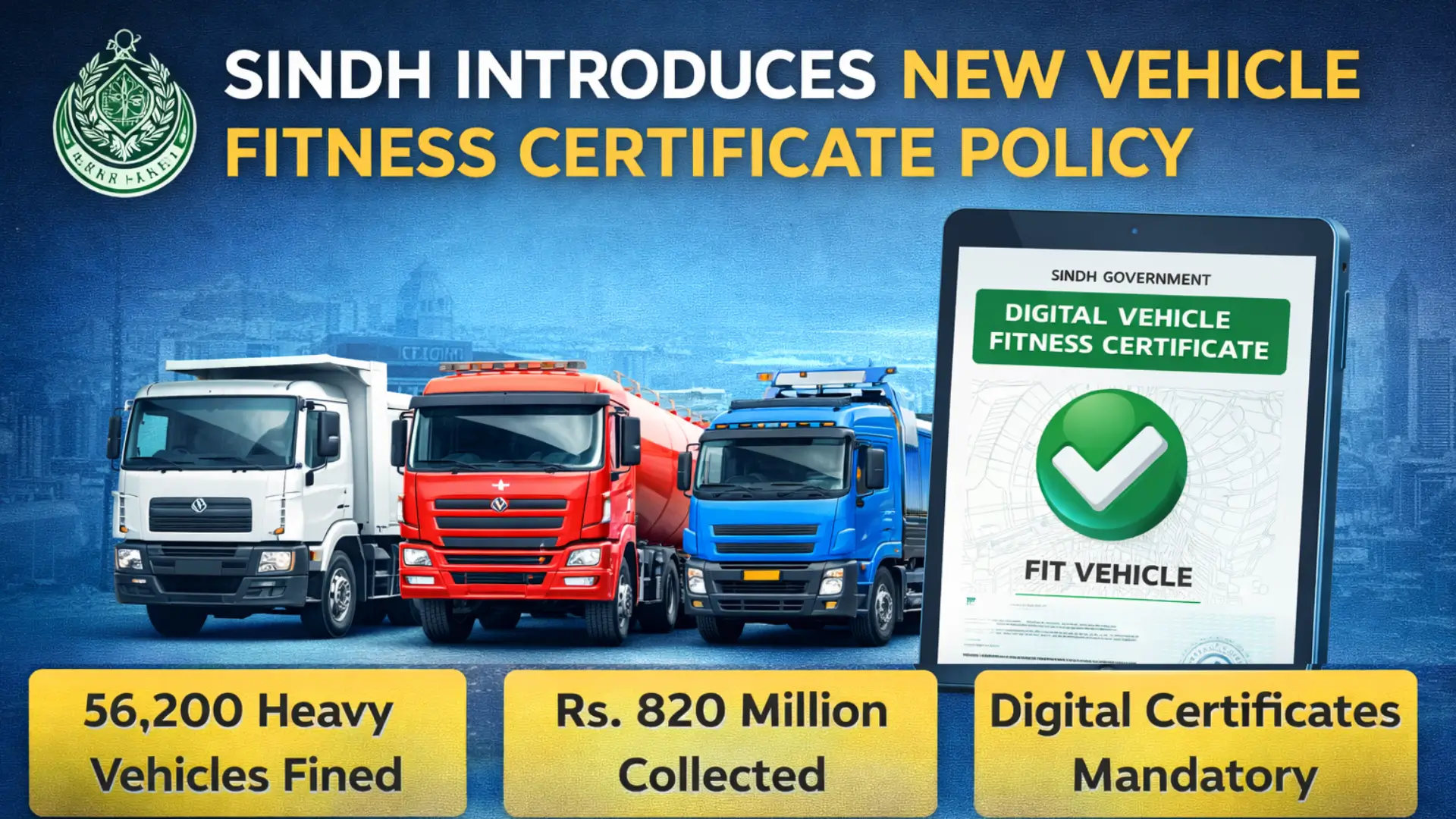
The push for safer roads and more environmentally friendly transportation has never been stronger in Sindh. According to Sharjeel Memon, last year alone, authorities imposed fines totaling Rs. 820 million on 56,200 heavy vehicles for failing to meet fitness standards.
Memon highlighted that this figure includes a variety of vehicle types, such as:

- 2,935 dumpers
- 2,138 oil tankers
- 183 tractors
- 13,918 trailers
- 30,917 trucks
- 6,109 water tankers
These figures reflect a significant portion of Sindh’s transportation sector, which has historically faced challenges in maintaining vehicle standards. The new policy aims to crack down on unsafe vehicles that are often responsible for accidents, road damage, and environmental pollution.
Digital Fitness Certificate System
One of the most notable changes introduced by the Sindh government is the shift from a manual fitness certificate system to a fully computerized process.
Why the Change Was Necessary
Previously, fitness certificates were issued manually, without proper records, creating room for fraudulent practices and lack of accountability. Moreover, it was found that vehicles from other provinces, including Khyber Pakhtunkhwa and Balochistan, could obtain fitness certificates in Sindh, often without undergoing the required checks. This inconsistency in the certification process has now been addressed with a robust digital system.

The New Digital System
Under the new policy:
- Every vehicle must now undergo a digital fitness test.
- Once a vehicle is verified as fit for road use, it will be issued a digital fitness certificate.
- This digital certificate will be part of an online database, ensuring full transparency and traceability.
As a result, no vehicle can operate on the roads without the new digital fitness certificate, drastically improving the process’s transparency and ensuring that all vehicles meet the required safety and environmental standards before hitting the road.
Impact on Heavy Vehicles and Enforcement
The introduction of digital fitness certificates comes as part of a wider effort to tackle the high number of unfit heavy vehicles on Sindh’s roads. According to Memon, the fines issued last year served as a wake-up call for vehicle owners to maintain their vehicles in proper condition.

Key Vehicle Categories Targeted
The types of vehicles targeted for fitness checks and certification include the heaviest and most potentially dangerous vehicles on the road, such as:
- Dumpers
- Oil tankers
- Trailers
- Water tankers
These vehicles often travel on highways and major roads, carrying heavy loads and, in many cases, dangerous goods. Ensuring that these vehicles meet fitness standards is critical for both road safety and environmental protection.
Acquiring Additional Buses for Public Transport
Alongside the vehicle fitness certificate initiative, the Sindh government has also made strides in improving the public transportation system. Memon stated that the government is in the process of acquiring additional buses to cater to the growing demand for public transport in the province.

Some of these buses are already at the port, and approval has been granted for the acquisition of 500 more buses in the coming months. These new additions to the fleet are expected to significantly enhance the efficiency and availability of public transport services in Sindh.
Improving Ridership on Public Transport
Memon also noted a rise in ridership on Sindh’s public buses, particularly on the Green Line. Since the introduction of the Green Line bus service, the number of daily passengers has risen from 50,000 to 85,000 passengers. This increase in ridership highlights the growing demand for better and more reliable public transport options in the province.
The government’s ongoing efforts to improve the bus fleet and introduce additional services are aimed at addressing this demand and ensuring that public transport becomes a viable and efficient alternative to private vehicles, especially in urban areas.

Future Prospects and Policy Enhancements
The introduction of the digital vehicle fitness certificate system is only the first phase of Sindh’s broader transport reforms. Moving forward, authorities plan to:
- Expand the digital system to include private vehicles, ensuring that all vehicles on the road meet proper fitness standards.
- Increase the frequency of fitness inspections for commercial vehicles, which play a significant role in the province’s economy.
- Continue acquiring additional buses and improving public transport infrastructure.
The Sindh government is also looking into offering subsidies or incentives for vehicle owners who comply with the fitness standards, making the transition smoother for owners of older vehicles.
Conclusion
The Sindh government’s launch of the vehicle fitness certificate policy is a bold step towards ensuring safer and more environmentally sustainable transportation. By digitizing the certification process, the government is creating a more transparent and efficient system that can help reduce road accidents and environmental damage caused by unfit vehicles.