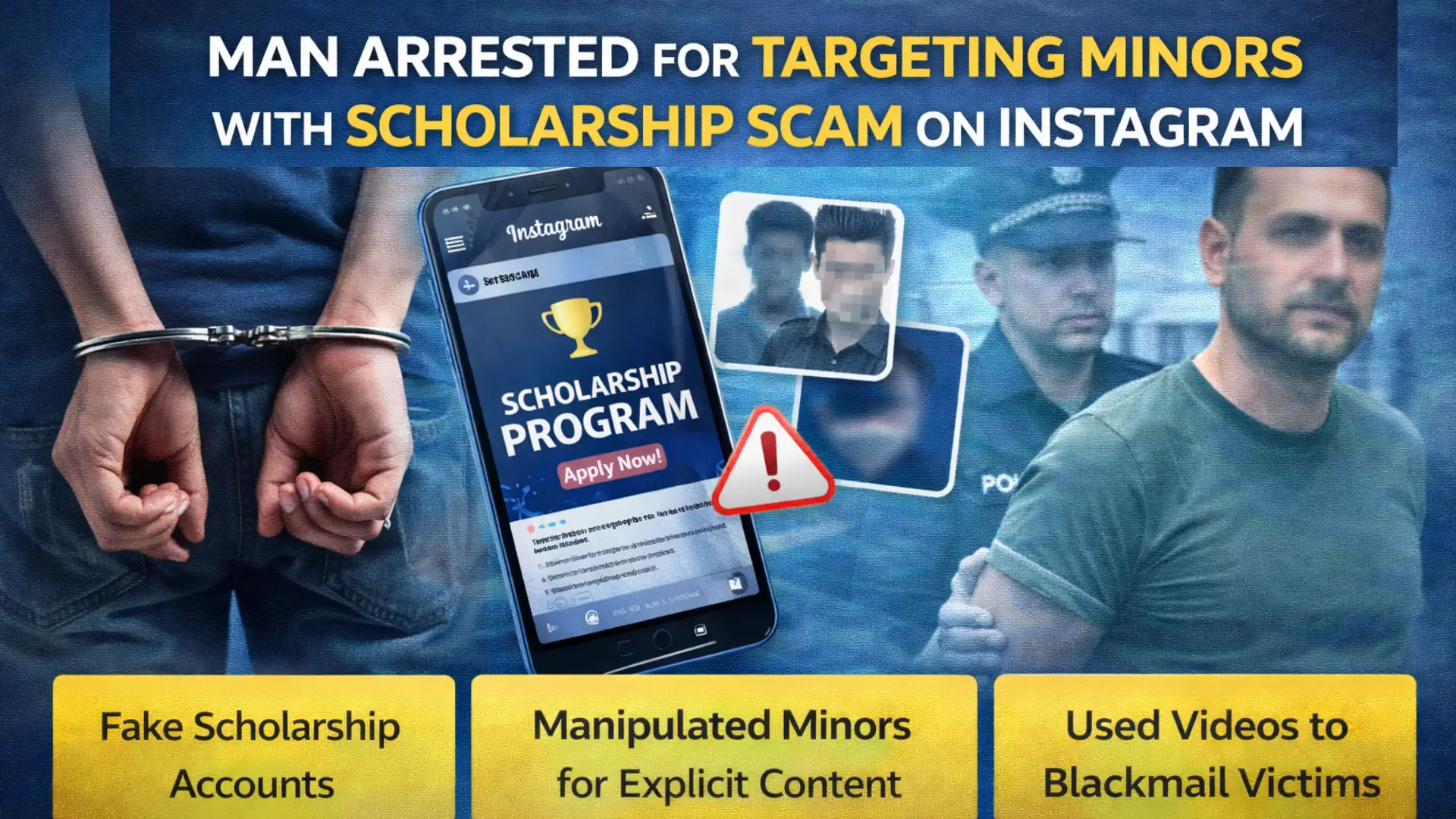

Scholarship Scam on Instagram. In a shocking development, Pakistan’s National Cyber Crime Investigation Agency (NCCIA) has arrested a man from Rawalpindi, who is accused of using social media platforms to exploit minors. The suspect allegedly ran multiple fake Instagram accounts posing as legitimate scholarship programs to target children, manipulate them, and coerce them into sharing explicit content. The incident has raised concerns about online safety, particularly for vulnerable minors in Pakistan.
Incident and Investigation
According to the First Information Report (FIR) filed at the NCCIA Cyber Crime Reporting Centre in Islamabad, the accused used fraudulent Instagram accounts to build trust with minors. These accounts falsely claimed to offer scholarships, luring children into online conversations. Once the children were groomed, the suspect allegedly manipulated them into sharing obscene and sexually explicit material.
The investigation, which followed NCCIA Enquiry No. 239/2026, revealed that the suspect had intentionally groomed at least two minor boys over time. After gaining their trust, he coerced them into sending explicit videos and images. The suspect then blackmailed the victims by threatening to release the content publicly unless his demands were met.
This case highlights the growing concern of online exploitation and blackmail targeting children, particularly on social media platforms like Instagram.

Blackmail and Threats
According to the authorities, once the suspect acquired explicit content from the minors, he used it to blackmail them. The accused is said to have threatened the victims with public exposure, coercing them into continuing the exchanges. In some cases, the suspect even attempted to unlawfully access the victims’ Instagram and WhatsApp accounts by asking for verification codes.
The authorities state that the suspect used a technical forensic analysis to gain unauthorized access to the children’s social media accounts. This included attempts to manipulate accounts by bypassing verification protocols, a clear violation of cybercrime laws in Pakistan.
Seized Evidence and Forensic Analysis
A forensic examination of the suspect’s mobile phone provided critical evidence in the case. Investigators recovered hundreds of files related to child sexual abuse material (CSAM) from the suspect’s device. These files were part of a larger network used to share, transmit, and even sell child exploitation content both within Pakistan and internationally.

The seized mobile device also revealed evidence that the suspect was in constant communication with several WhatsApp numbers and had an EasyPaisa account, which investigators believe was used for financial transactions linked to the illegal activities.
Moreover, authorities discovered that the suspect had manipulated mobile device data, as the IMEI number of the smartphone was altered. This act of electronic forgery is a serious crime under Pakistani law, and the suspect now faces charges under the Prevention of Electronic Crimes Act (PECA) 2016.
Additional Victims and Methods Used
Further investigation revealed that the suspect had targeted at least one other minor using a separate Instagram profile. This time, the suspect impersonated a female individual, creating a fake account to further manipulate the victim. Through this deceptive tactic, the suspect succeeded in obtaining explicit material from the second victim.

The investigation also uncovered that the suspect attempted to illegally acquire the WhatsApp verification code of the second victim. Using this, he likely aimed to gain control over the victim’s phone number and access their communication channels. This method of manipulation is becoming more common, with cybercriminals using social engineering tactics to gain unauthorized access to victims’ private information.
Digital Evidence and Connectivity Data
One of the most significant findings during the investigation was the discovery of digital records from Meta Inc. (the parent company of Instagram). These records confirmed that the fraudulent Instagram accounts were registered using phone numbers connected to the suspect. In one instance, authorities found that a phone number linked to one of the victim’s family members had been used to create an account, further complicating the case.
The connectivity data also showed that the fraudulent Instagram accounts were operated directly from the suspect’s mobile device and internet connection. This evidence not only proved the suspect’s involvement in running the scam but also provided vital information about how he managed multiple fake accounts and coordinated his activities.

Legal Charges and Ongoing Investigations
The FIR has been filed under various sections of PECA 2016 and relevant provisions of the Pakistan Penal Code. The suspect faces multiple charges, including:
- Child exploitation
- Cybercrimes
- Electronic forgery
- Blackmail
The NCCIA has emphasized that the case is ongoing, and investigations are still in progress. Authorities are working to identify and investigate additional suspects who may have been involved in aiding or facilitating the criminal activities.
Growing Threat of Online Exploitation
This case serves as a stark reminder of the growing threat of online exploitation, particularly for vulnerable minors. With the rise of social media and other online platforms, children are increasingly at risk of being targeted by cybercriminals using deceptive tactics.

The case also raises concerns about the responsibility of social media platforms in preventing such exploitation. While Instagram and other platforms have implemented measures to detect and prevent abuse, there are still significant gaps in ensuring the safety of minors online.
Conclusion
The arrest of the Rawalpindi resident involved in the Instagram scholarship scam serves as a warning to both individuals and parents about the potential dangers of online platforms. The NCCIA has demonstrated its commitment to addressing cybercrime and online exploitation, but it’s clear that more needs to be done to protect vulnerable individuals from such predatory behavior.